Latest Blog Posts


Sep 14
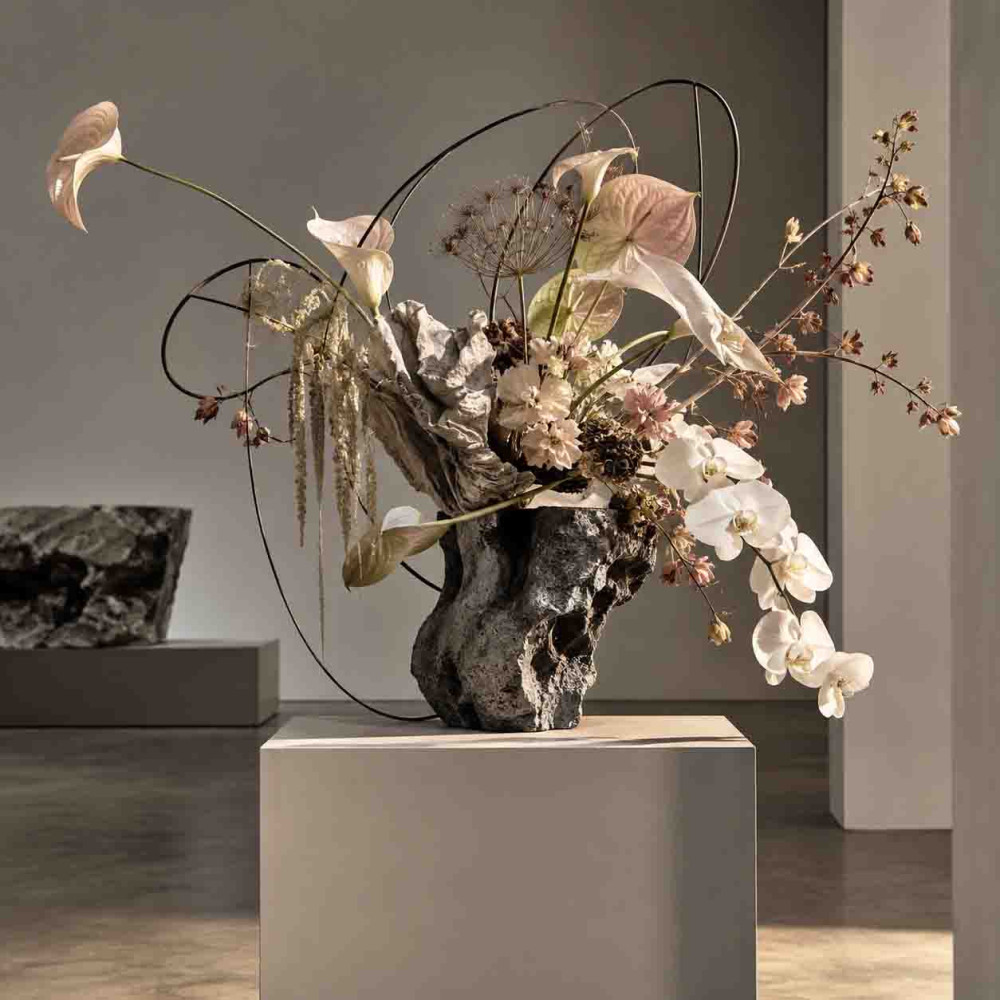
Bouquet as an Art Object: Where Floristry Ends and Contemporary Art Begins in 2026
Introduction: Floristry Moves Beyond Function and Becomes a Language
For a long time, floristry remained within an applied framework: a bouquet as a service, an addition to an occasion, a visually pleasing object that was expected to meet certain expectations. Its purpose was clear — to look neat, “beautiful,” and appropriate. This model provided stability for the market, but at the same time limited its development because the value of the product remained tied to function.
By 2026, it has become clear that this model is no longer the only one. Floristry is beginning to integrate into a broader cultural context in which objects are evaluated not only by their utilitarian characteristics, but also by their ability to provoke a reaction, create meaning, and make a visual statement. A bouquet is no longer simply a “beautiful collection of flowers” and becomes an object that can operate at the level of an idea.
This does not mean that the entire market is turning into art. It means that a new layer is emerging within it — floristry as an art object. And it is precisely this layer that is beginning to influence perception, pricing, and brand development.
From “Beautiful” to “Meaningful”: A New Logic of Evaluation
Traditional floristry is based on a universal concept of beauty. A bouquet is expected to appeal to the majority, to be harmonious, neat, and visually pleasing. However, in the context of 2026, this is no longer enough. The modern customer lives in an oversaturated visual environment where “beautiful” becomes background noise and stops attracting attention.
A new category is taking its place: significance. A bouquet should not simply be pleasing; it should provoke a response. This response may be interest, surprise, or even slight resistance — but there must be a reaction. Reaction itself becomes a new criterion of quality.
This shift changes the approach to creating the product. A florist begins to work not only with form, but also with perception. What matters is not how closely the bouquet matches expectations, but how it transforms them. This requires a different way of thinking and a different level of responsibility for the result.
What Makes a Bouquet an Art Object: Not Form, but Intention and System
One of the main mistakes is trying to define art floristry through appearance. In practice, the key factor is not form, but intention. An art object is not simply an “unusual bouquet,” but a composition that contains an idea and a logic behind its realization.
Such a bouquet always exists as a system. It has an internal structure, even if that structure is not immediately obvious. Its elements are not simply assembled together; they are subordinated to a common concept. This can be expressed through the use of space, deliberate asymmetry, the use of emptiness as an active element, the creation of tension, or, conversely, calm.
What matters is that without an idea, these techniques do not work. They turn into chaos or mere stylization. This is why art floristry requires not only technical skill, but also the ability to think conceptually.
How Customers Perceive an Art Bouquet: Between Interest and Resistance
One of the key areas that cannot be ignored is customer behavior. Art floristry does not exist in a vacuum. It always encounters perception, and that perception determines its effectiveness.
The first reaction is a pause in attention. Unlike a standard bouquet, which is quickly understood and just as quickly forgotten, an art object breaks the familiar pattern. The eye cannot immediately classify what it sees. This creates a pause, which becomes critically important in an environment filled with visual noise. Attention is the first step toward value.
The second reaction is an attempt at interpretation. The customer begins to “assemble” the meaning. They ask themselves why the object looks exactly this way. Even if there is no clear answer, the process itself makes the object more significant. It stops being simply a product and becomes an experience.
The third reaction is polarization. An art bouquet rarely generates a neutral response. A person either likes it or does not. But in both cases, it is remembered. This is a key point because, in the modern market, memorability is more important than universality. A universal bouquet is sold once. A memorable one creates return behavior.
Why the Market Resists: Risk, Money, and Fear of Losing Control
Despite its potential, art floristry faces systemic resistance. And this resistance is connected not with aesthetics, but with economics.
The first factor is conversion risk. Not every customer is ready to buy something they do not fully understand. This reduces the predictability of sales. In the traditional model, the florist knows that a “clear” bouquet will sell. In the art model, there is no such guarantee.
The second factor is communication complexity. An art object requires context. It needs to be explained, demonstrated, and positioned. This increases the burden on marketing and sales.
The third factor is fear of error. If the idea is not understood, the bouquet may be perceived as “strange” or “poorly made.” This creates internal resistance within the team.
However, these same factors also create an opportunity for growth. Where there is risk, there is an opportunity to move beyond direct competition and work in a category where price is determined not by the market, but by perception.
The Economics of Art Floristry: How Perception Creates Margin
Art floristry changes not only the product, but also the economics behind it. In the traditional model, margin is limited by cost. To earn more, a business must either reduce purchasing costs or increase volume.
The art model introduces a third path — increasing perceived value. A bouquet begins to be seen as a unique object rather than simply a collection of flowers. This makes it possible to increase price without a proportional increase in cost.
Price sensitivity also decreases. The customer is no longer comparing “how many flowers there are,” but “what kind of object this is.” This moves the product into another category, where competition is based not on price, but on meaning.
Therefore, art floristry becomes a tool for increasing margin, not merely an aesthetic direction.
Where the Boundary Between Design and Art Lies
Floristry today exists at the intersection of two fields — design and art. Design solves a task. It makes a bouquet understandable, functional, and balanced. Art asks a question. It can be uncomfortable or unfamiliar, and that is precisely what makes it significant.
The boundary lies in intention. If a composition is created to meet an expectation, it is design. If it is created to change perception, it is already art.
It is important to understand that these categories are not opposed to each other. They can coexist. But understanding the difference allows a business to choose its strategy consciously.
How Art Floristry Strengthens a Brand and Reduces Competition
In a saturated market, the main advantage is differentiation. Art floristry makes it possible to move beyond the “same as everyone else” zone and create a unique visual language.
This affects positioning. The brand begins to be perceived not as a point of sale, but as a source of ideas. This increases perceived value and reduces dependence on price.
Memorability also becomes stronger. A customer may not buy immediately, but they remember. This creates a long-term effect that cannot be achieved through standard solutions.
Limitations: Why Art Floristry Does Not Scale According to the Traditional Model
It is important to understand that art floristry is not a universal tool that can be mechanically introduced into any business and immediately generate growth. Unlike traditional bouquets, where processes can be standardized, scaled, and transferred through training, the art approach depends directly on the florist’s thinking, visual experience, and ability to work with ideas. This makes the product less reproducible and reduces operational control.
The main difficulty is that an art bouquet cannot be turned into a fixed “model.” It cannot be fully captured in a regulation or checklist because its key value is created not through repetition, but through interpretation. As a result, the business faces a limitation: growth requires either expanding the team with highly skilled professionals or accepting a decline in quality when attempting to simplify the product.
There is also the factor of sales instability. In traditional floristry, demand is more predictable because the product matches expectations. In art floristry, demand depends on the customer’s willingness to perceive and accept unconventional solutions. This makes sales less even and requires a different financial model, one that takes into account a longer decision-making cycle and a higher value per order.
This is why art floristry rarely becomes the foundation of a mass-market business. It works as a layer that strengthens positioning, increases margin, and builds uniqueness, but does not completely replace the core product. Attempting to make it the only model without considering these limitations leads to team overload and unstable revenue.
The Future of Floristry: From a Commodity Market to a Cultural Economy
Floristry is gradually moving beyond the boundaries of the commodity market and integrating into the cultural economy, where value is created not only through the product itself, but also through meaning, context, and interpretation. This process has already taken place in fashion, design, and gastronomy, and now a similar transformation is occurring in the flower business.
This means that competition is shifting. In the past, the key factors were the quality of raw materials and price. Now, ideas, visual language, and a brand’s ability to create its own identity are becoming increasingly important. A bouquet becomes part of communication rather than simply a product. It begins to function as a carrier of meaning that can be “read,” discussed, and remembered.
In this model, the role of the florist also changes. The florist stops being merely an executor and becomes an author. This requires a different level of responsibility and a different approach to work. It is no longer enough to create something “beautiful” — it is necessary to understand what exactly is being created and why it exists within the context of the brand.
For businesses, this opens up new opportunities, but at the same time raises the requirements. Mistakes become more visible because the product begins to be evaluated not only by form, but also by content. Yet it is precisely within this complexity that a new growth opportunity is formed.
Conclusion: New Value Is Created Not in the Flowers, but in the Meaning
The key change taking place in 2026 is a shift in the source of value. In the past, value was found in the material — in the flowers themselves, their quantity, rarity, and price. Now, it is increasingly shifting into the realm of perception. A bouquet begins to be evaluated not only by what it is made of, but also by what it communicates.
This changes the rules of the game. A business that continues to work only through raw materials remains in the zone of direct competition, where price and assortment become the main tools. A business that begins to work with meaning gains the opportunity to step outside this competition and create its own category.
In this context, art floristry becomes not simply an aesthetic direction, but a strategic tool. It makes it possible to create a product that is not directly comparable, but is perceived as unique. This is what creates the opportunity to increase value, retain customers, and build a long-term brand.
Ultimately, the winners are those who understand that a bouquet is not simply a collection of flowers, but a form of communication. And the more precise that communication is, the greater the value of the product.
Your experience matters! Take a short survey and see what answers other flower business representatives gave. Take part